
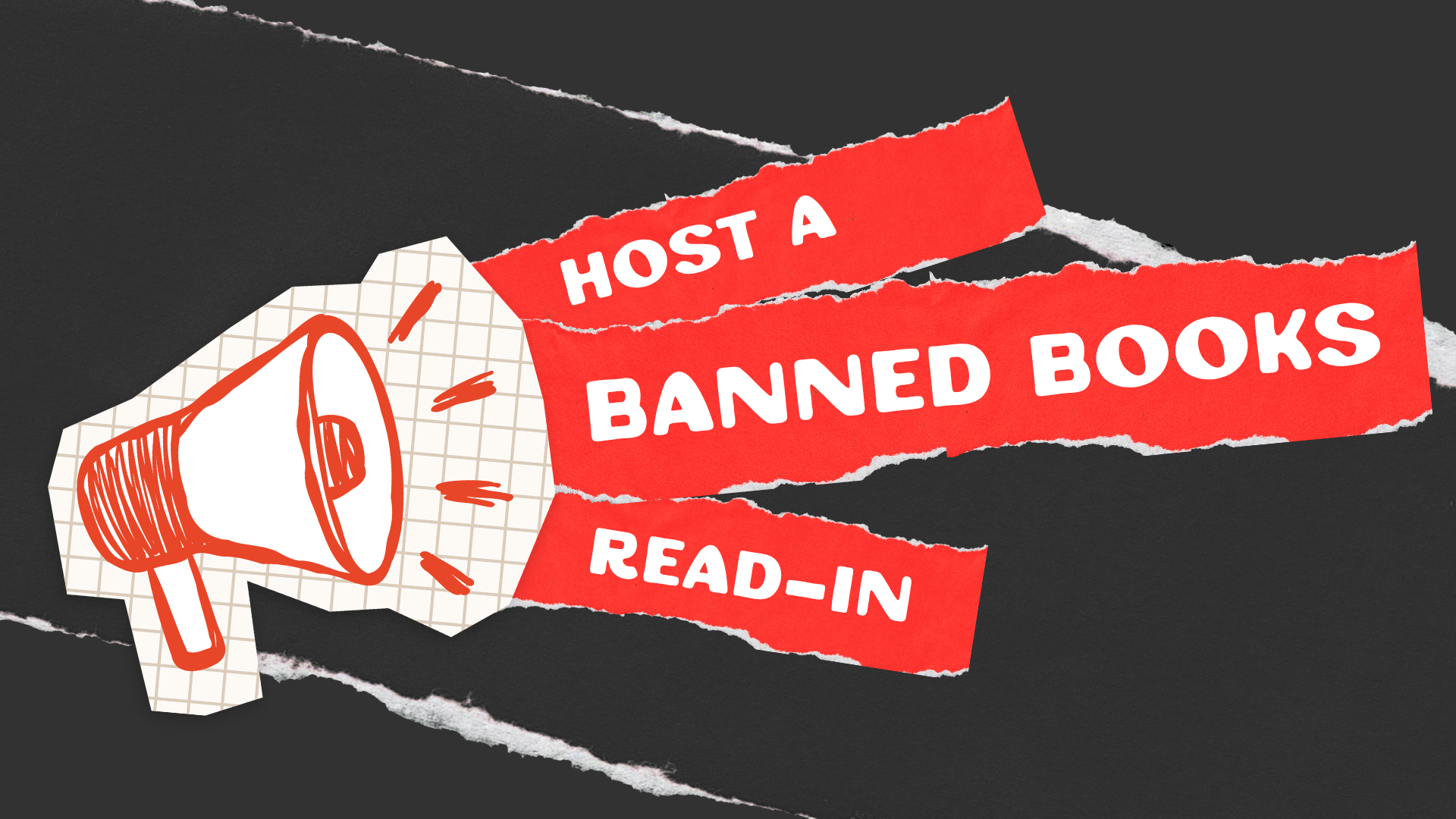
For the second year in a row, we’re working with Silent Book Club, independent bookshops, and libraries across the globe to host Banned Books Read-Ins this Banned Books Week (October 4-10).
These 400 participating stores and libraries are inviting readers to join them in fighting censorship, organizing anything from audiobook walks to postcard writing to banned book swaps. And attendees receive a free audiobook copy of either Banned Together: Our Fight for Readers’ Rights or How to Defend Books and Why to help them continue fighting bans even after the event is over!
Unfortunately, book bans are escalating. In fact, in 2025, 4,235 unique titles were challenged, according to the American Library Association. That’s the second highest number they’ve ever recorded. There are also currently multiple bills in the US House and Senate that will restrict the freedom to read.
As book lovers, we’re likely already a part of some reading community, whether a book club with friends, or a group chat with family. So why not fight book bans together?
We’ve put together a resource kit to help you host your own meetup, whether during Banned Books Week or beyond. Remember: Your voice is powerful.
Resources to learn more about book bans
- What Is Censorship? (National Coalition Against Censorship)
- Unite Against Book Bans: Talking Points and FAQ (Unite Against Book Bans)
- Empowered by Reading: The Benefits of Giving Youth Access to a Wide Variety of Reading Materials (Unite Against Book Bans)
- Defend LGBTQ Stories (National Coalition Against Censorship)
- How Local Government Shapes Our Daily Lives (Red, Wine, & Blue)
- Literary Activism: News you can use plus tips and tools for the fight against censorship and other bookish activism (Book Riot)
- Talking Book Bans with Leah Johnson and Kelly Jensen (Libro.fm)
- An Interview With Amanda Jones, Author of That Librarian (Libro.fm)
- Maggie Tokuda-Hall on Free Expression and Fighting Book Bans (Libro.fm)
- Books about censorship (Libro.fm)
- Censorship by the Numbers (American Library Association)
- Youth Censorship Database (National Coalition Against Censorship)
How can we fight book bans?
- School Boards Matter: A Guide to Effectively Advocating at the School Board Level (Human Rights Campaign)
- Book Resumes (Unite Against Book Bans)
- Book Resumes (Penguin Random House)
- The ABA Right to Read Handbook: Fighting Book Bans and Why It Matters (American Booksellers Association)
- Form: Report censorship (American Library Association)
- Form: Report censorship (National Coalition Against Censorship)
- Know Your Rights: Protesters’ Rights (ACLU)
- A Book Ban Action Guide for Authors (The Authors Guild)
- Petition: Stop the Federal Book Bans (EveryLibrary)
- Script: Oppose Nationwide Book Ban Bills (5Calls.org)
For young readers
- Be Heard: Protecting Your Protest Rights (National Coalition Against Censorship, Comic Book Legal Defense Fund, Kai Texel)
- Kids’ Right to Read: Action Toolkit (National Coalition Against Censorship)
- 4th Graders Challenge Book Bans and Scholastic (D.C. Area Educators for Social Justice)
- Let’s Talk: Leader Moderation Guide (FIRE)
Get creative: Activities for your Read-In

Read and discuss a banned book
No Read-In would be complete without a reading component! Have your group all read a banned book before meeting up, or have folks come ready to talk about a banned book that has shaped their life.
And then once you’ve chatted about the book(s), set some time aside to take action.

Write postcards to representatives
Especially with numerous bills in the House and Senate threatening the freedom to read, contacting our reps is essential! Have attendees write and mail postcards to representatives, sharing their perspectives. On a budget, or don’t have postcards? Letters, emails, or phone calls all work, too!
- Find local officials (Unite Against Book Bans)
- Email Your Reps: Don’t Ban Books in the United States (EveryLibrary)
- Oppose Nationwide Book Ban Bills (5Calls.org)
💡Pro Tip from Unite Against Book Bans: “Your letter or comments will be strongest if you are succinct, while also demonstrating your concern over book banning efforts and your connection to this issue (i.e. as a parent, as a student, as an educator, as a local business owner, as an engaged community member, as a librarian, as a reader, etc.).”
Sign and/or organize a petition
Petitions are a great way to make voices heard, and show widespread opposition. Create or sign an already existing petition in your community to fight bans as part of your event.
- Launch a Petition (EveryLibrary)
- Create, Circulate, and Successfully Deliver a Petition (Unite Against Book Bans)
- Sign a Petition: Don’t Arrest Librarians in the United States (EveryLibrary)
- Sign a Petition: Stop the Federal Book Bans (EveryLibrary)

Contact local media outlets
Let your local newspaper’s editor know why the freedom to read is important, and the impact stories—as well as bans—have had on you and your community.
- Submit a Letter to the Editor Against Book Bans (EveryLibrary)
- Op-Ed Writing: The Basics (The Op-Ed Project)
💡Pro Tip: Search for the paper’s editor online, and address the letter to them, using their email if provided (it may also be a web form). Before writing your letter, see what coverage the paper has shared (if any) on book bans in the past. Your paper may have guidelines on submission requirements, such as text limits.
Prepare for school/library board meetings
Know of an upcoming school and/or library board meeting that plans to address book bans? Have a discussion about how attendees can make their voices heard and prep any statements together—there is strength in numbers!
- School Boards Matter: A Guide to Effectively Advocating at the School Board Level (Human Rights Campaign)
- A Template for Talking With School and Library Boards (Book Riot)

Create art to hang and share in your community
Whether posters, poems, or zines, art plays a powerful role in protest! Have attendees create art expressing the importance of the freedom to read. See if any local businesses in your community are willing to display them, alongside information on fighting bans!
Whether two people or thirty people, there is strength in numbers! We hope this guide inspires you to host or join a Read-In near you. The fight for the freedom to read needs all of us.